





News ZH
-
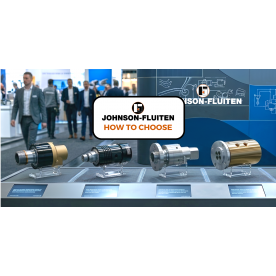
Rotary joints are critical components in fluid transfer systems between stationary lines and rotating equipment. They enable the transfer of water, steam, oil, air, gas, and other media without leakage, ensuring reliability and performance even under demanding operating conditions. Proper selection directly impacts production efficiency, service life, maintenance intervals, and operating costs. When and Why Is a Rotary Joint Required in Your Machine? Typical functions: • Transfer of fluids for heat exchange (e.g., steam/water in paper machine drying cylinders)• Supply of coolant or MQL to machine tool spindles What Are the Key Technical Parameters to Consider? Selecting a rotary joint is not determined by
-

Today, maintenance is no longer a reactive function. It is a design variable that directly affects productivity, reliability, and overall operating costs. This is especially true for critical components, such as rotary joints, used to transfer water, steam, thermal oil, and other industrial fluids in continuous applications that are strategically important for production. When a rotary joint stops or leaks, the impact is rarely limited to the component: even a short machine downtime affects production, quality, and safety. It is in this context that the concept of Maintenance 4.0 takes on concrete meaning. Why is the maintenance of rotary joints a critical issue? In many plants, rotary joints are perceived as standard components. The problem arises when it becomes necessary to replace the mechanical seal, which is often designed to be accessed only after the joint has been removed from the machine. This approach typically involves:
-
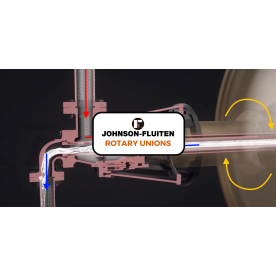
Whether it is paper manufacturing, plastic packaging printing, chemical processing, or operating complex machine tool systems, transferring fluids between stationary and rotating components is a constant engineering challenge. What exactly is a rotary joint? A rotary joint, also known as a rotary union, is a precision mechanical sealing device that allows the transfer of a fluid (liquid or gas) from a stationary supply line to a rotating machine component.Consider a heated roll in a paper mill or a machine tool spindle requiring coolant: the fluid must enter the component while it rotates at high speed, without leakage and while maintaining constant pressure. The rotary joint is the interface that makes this possible. Common industry terms include:
-
The acquisition of Dynamic Sealing Technologies Inc. (DSTI) by Kadant Inc. marks a strategic shift for the European rotary joint industry. Below, different professionals explain what will change for customers, sectors, and technologies. Solutions for complex applications Sam Burvee
-

For over a decade, Babbini has been using Johnson-Fluiten rotary joints in its presses: solutions that have proven to be reliable, flexible, easy to maintain, and supported by an ever-present technical service. A relationship of trust that has contributed to the reputation for excellence of the machinery manufactured by this historic Italian manufacturer. Founded over 160 years ago, Babbini specializes in the design and construction of dehydrating presses for the sugar industry. Its high-efficiency solutions, based on counter-rotating twin screw systems and hollow shafts, are now used worldwide to optimize liquid-solid separation processes. Babbini machines, often customized to customer requirements, are distinguished by their high operational efficiency, even under harsh conditions. Attention to components
-

The race towards a sustainable future is not only fought in large-scale renewable energy projects, but also in the technical details that often go unnoticed by non-specialists. Here is where rotary unions, used in Kaplan turbines for hydroelectric power generation, become the key to transforming water movement into clean electricity. Hydroelectric comparison: differences between turbines In the hydroelectric sector, several types of turbines are used to generate clean energy, among which the most common are Pelton, Francis and Kaplan turbines. The choice mainly depends on the hydraulic head and the water flow available. Pelton turbines are designed for very high heads and low flows. They are ideally used in mountain plants, where steep gradients make it possible
-
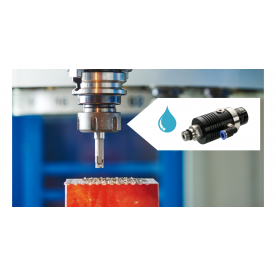
Lubrication is often considered a simple operational detail, but for those who design, build or work with machine tools, it is a key element in ensuring high performance, safety and durability of equipment. It is from this awareness that our new technical whitepaper, developed in collaboration with the editors of Tecnologie Meccaniche / Techmec.it, was born. An in-depth study designed for engineers, designers, production managers, and maintenance personnel that takes a clear and applicable look at the key points of a process that is too often underestimated: proper lubrication management.
-

Cos'è un giunto rotante e perché è fondamentale nelle macchine utensili? Un giunto rotante è un componente meccanico che consente il passaggio di fluidi da una parte fissa a una parte rotante della macchina. Nelle macchine utensili CNC, questi giunti sono fondamentali per garantire il raffreddamento, la lubrificazione o il trasferimento di energia in condizioni estreme di velocità e pressione. Cosa rende un giunto rotante "affidabile" in ambito industriale? Un giunto rotante affidabile è quello che garantisce continuità operativa senza guasti o perdite di prestazioni nel tempo. Significa zero fermi macchina, riduzione dei costi di manutenzione e massimizzazione della produttività. Quanto può durare un giunto rotante industriale? Nella media, un giunto rotante può durare da pochi anni fino a 10 anni, a seconda dell'applicazione e delle condizioni operative. Tuttavia, i giunti rotanti Johnson-Fluiten hanno dimostrato di funzionare senza problemi anche per 24 an
-
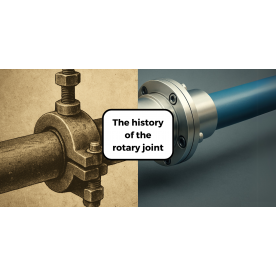
When you look at the heart of any advanced manufacturing line, whether it’s a paper mill, a food processing plant, or a high-speed CNC machine, you’ll find a component working tirelessly behind the scenes: the rotary joint. Industrial engineers, production and maintenance managers know the pain of fluid leaks, frequent maintenance, and costly downtime. But what if the solution was a single innovation that transformed how industries harness water, steam, and other fluids in motion? What is a rotary joint and why is it important in industrial machinery? A rotary joint—also known as a rotary union or swivel joint—is a mechanical device that allows the transfer of steam, water, oil, coolant, air, or other media from a stationary source to a rotating part, such as a drying cylinder, drum, or spindle. Industrial rotary joints are essential in paper manufacturing, CNC machining, food processing, and chemical production. Common rotary joint a
-

Meet the challenges of high temperatures with a simple component but designed to last In the chemical, pharmaceutical, plastics and printing industries, applications requiring the use of high-temperature diathermic oil are becoming increasingly common. But how to ensure safety, operational continuity and low maintenance requirements? The answer lies in choosing the right rotary joint. The Z-series rotary joint was developed precisely to meet these critical needs. Thanks to its design and high-quality materials, it is a reliable, efficient and durable solution even under extreme conditions. The Z rotary joint is distinguished by its thermal and mechanical resistance, making it ideal for applications with diathermic oil up to 300°C