





Practical Guide to Selecting the Right Rotary Union for Your Plant
Rotary joints are critical components in fluid transfer systems between stationary lines and rotating equipment. They enable the transfer of water, steam, oil, air, gas, and other media without leakage, ensuring reliability and performance even under demanding operating conditions. Proper selection directly impacts production efficiency, service life, maintenance intervals, and operating costs.
When and Why Is a Rotary Joint Required in Your Machine?
Typical functions:
• Transfer of fluids for heat exchange (e.g., steam/water in paper machine drying cylinders)
• Supply of coolant or MQL to machine tool spindles
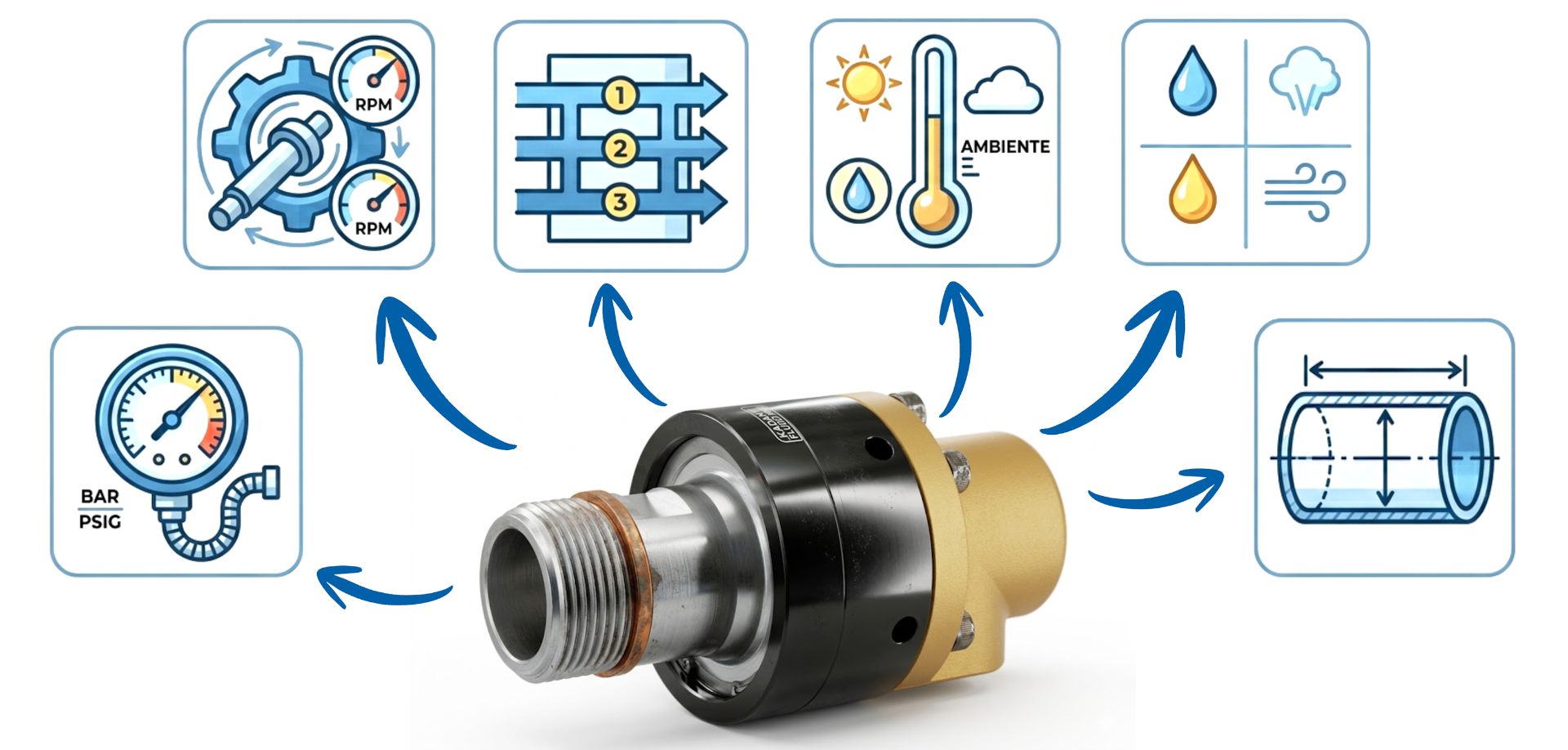
What Are the Key Technical Parameters to Consider?
Selecting a rotary joint is not determined by the fluid alone: it requires balancing operating parameters, required performance, and environmental conditions.
3.1 Pressure (BAR / PSIG)
Operating pressure influences seal design and material selection. Joints equipped with high-quality sealing elements and balanced seal faces provide stable performance even at elevated pressures.
3.2 Rotational Speed (RPM)
High speeds require bearings and sealing systems optimized for low friction and dynamic stability. In the Johnson-Fluiten G Series, rotational speed can exceed 50,000 RPM in models dedicated to machine tool applications.
3.3 Fluid / Ambient Temperature
Seal materials are critical: selected materials such as PTFE or engineered solutions allow management of fluids up to 300–400 °C in the most demanding applications.
3.4 Type of Fluid
Water, steam, thermal oil, or gas require compatible seal and material combinations, directly affecting reliability and maintenance requirements.
3.5 Passage Size and Flow Volume
Internal passages determine joint diameter and fluid velocity: larger diameters facilitate higher flow rates while minimizing excessive pressure drop.
3.6 Number of Passages
From single to multiple passages: multi-channel designs allow simultaneous transfer of different media but require advanced sealed configurations.
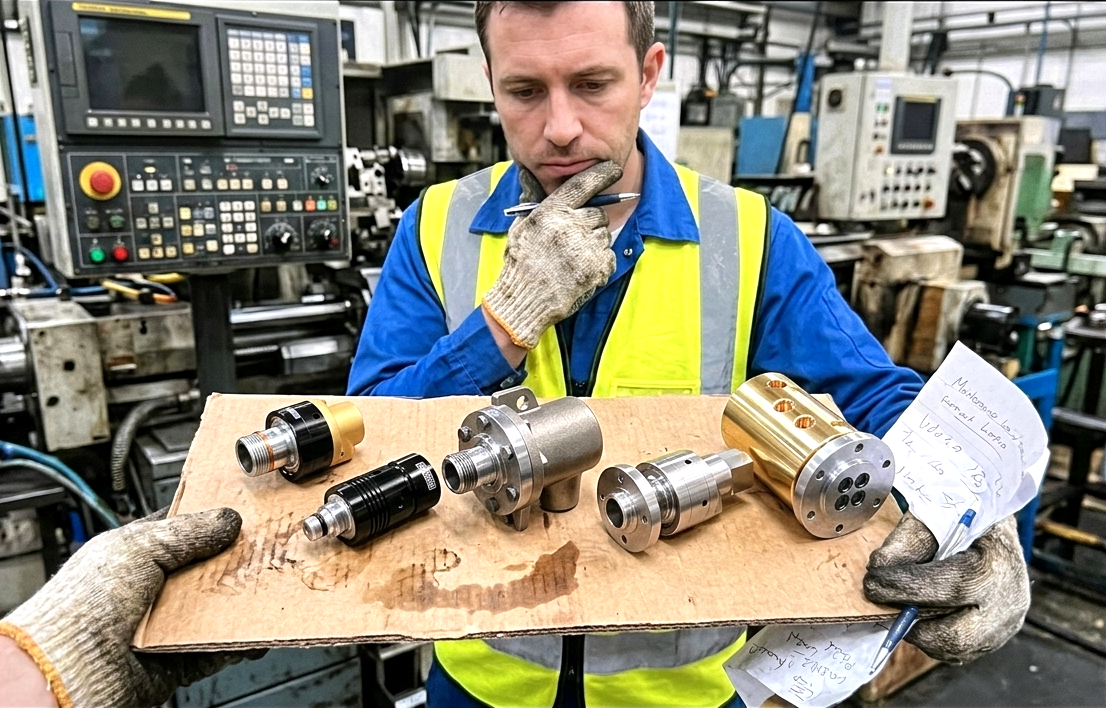
How to Select the Right Rotary Joint: Two Approaches
Selection by Industry Application
Paper & Corrugating
• Requirement: steam/condensate management for drying and energy control
• Recommended products: multi-passage solutions for steam/water with corrosion-resistant materials
Textile
• Requirement: precision in fiber processing and finishing
• Solutions: highly reliable joints operating efficiently at low speeds and pressures
Rubber & Plastics
• Requirement: oil/air transfer in extrusion and mixing processes
• Solutions: joints with seals specifically designed for viscous fluids
Chemical & Pharmaceutical
• Requirement: high cleanliness standards and chemical resistance
• Solutions: AISI 316 stainless steel materials, FDA/ATEX-compliant seals
Steel Industry
• Requirement: resistance to extremely demanding operating conditions
• Solutions: heavy-duty joints with materials engineered for severe service
Food & Beverage
• Requirement: compliance with hygienic standards, steam/water transfer for processing
• Solutions: stainless steel joints with certified sealing systems
Machine Tools
• Requirement: high speed and precision
• Solutions: high-speed, high-pressure rotary joints
Energy
• Requirement: high-pressure/high-temperature fluids
• Solutions: custom-engineered joints designed for extreme conditions.

Selection by Operating Variables
A pragmatic approach is to start with a structured analysis of your plant’s operating specifications:
-
Define nominal and maximum fluid pressure.
-
Quantify average and peak rotational speed.
-
Determine expected operating temperature.
-
Classify the type of fluid to be transferred.
-
Calculate required flow rate and number of passages.
-
Assess environmental conditions (dust, vibration, elevated ambient temperatures).
This method leads to a shortlist of technically appropriate models and any necessary customizations (e.g., special seals, specific materials, dedicated flanges).
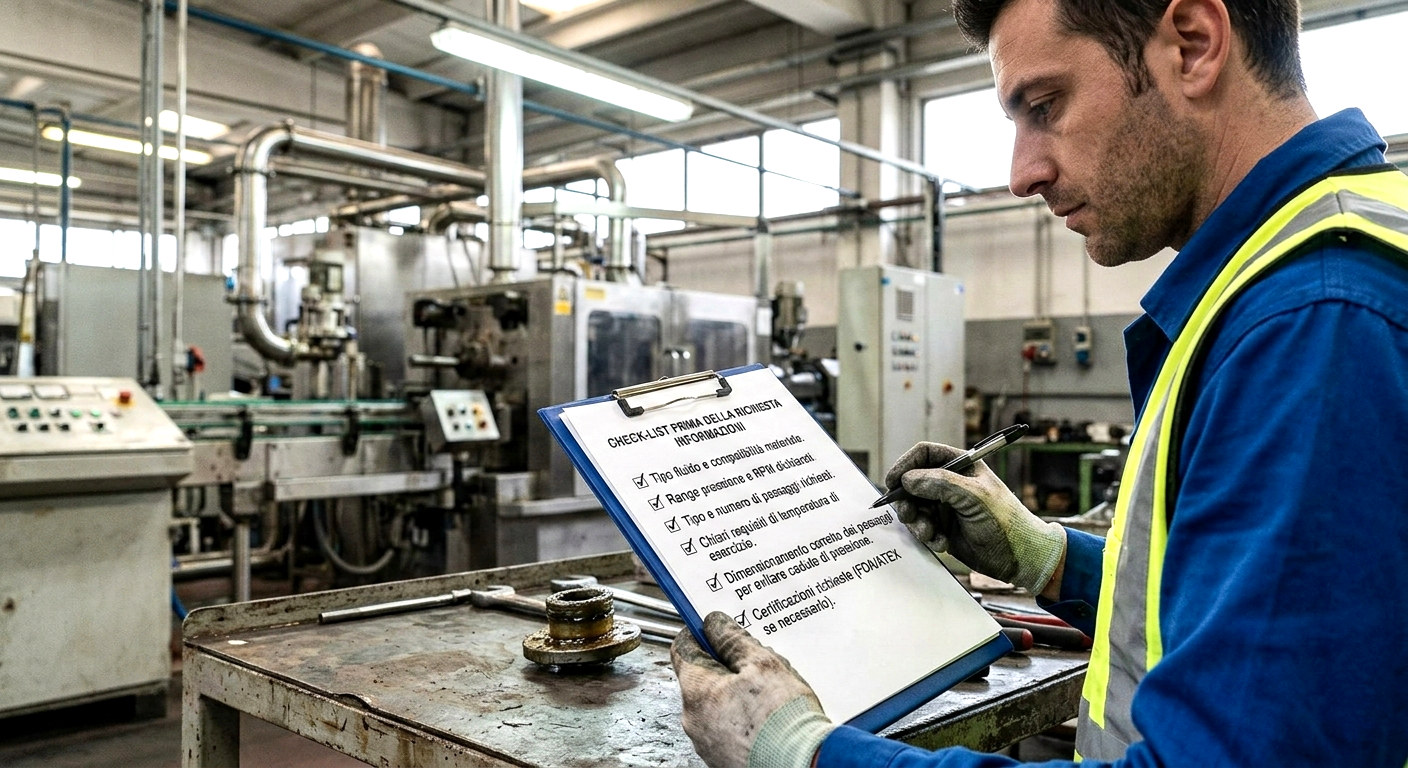
Pre-Order Quick Check List
Before submitting a purchase request to your procurement team or to Johnson-Fluiten, verify:
✔ Fluid type and material compatibility
✔ Declared pressure and RPM range
✔ Required type and number of passages
✔ Clearly defined operating temperature requirements
✔ Proper passage sizing to avoid pressure drops
✔ Required certifications (FDA/ATEX where applicable)
Selecting a rotary joint is a technical process that must be driven by actual operating specifications and clearly defined performance criteria. Integrating these criteria with the support of an experienced supplier helps prevent specification errors, reduce unplanned downtime, and improve overall efficiency.
Technical Glossary
Rotary Joint / Rotary Union
A mechanical device that enables the transfer of fluids (steam, water, oil, gas, coolant, air, etc.) from a stationary component to a rotating one while maintaining sealing integrity and minimizing leakage. It is essential in industrial systems with rotating cylinders, spindles, rollers, and presses.
Passages / Channels
Internal flow paths within the joint through which the fluid is transferred. They can be single or multiple depending on the number of media/services handled.
Mechanical Seal
A sealing system that prevents fluid leakage during rotation. Seals may be balanced, lip-type, hydrostatic, or polymer-based depending on the application.
Labyrinth Seal
A type of seal where the path between rotating and stationary components is tortuous, delaying and restricting fluid escape by geometry rather than direct contact.
Bearings
Components that support joint rotation and maintain alignment of moving parts. They may be ball, roller, or specialized designs, affecting speed capability and load capacity.
RPM (Rotations per Minute)
Unit of rotational speed measurement. It is a critical parameter because it influences friction, seal wear, bearing selection, and overall rotary joint performance.
Pressure (BAR / PSIG)
The force exerted by the fluid inside the joint. It affects seal type and material selection; higher pressures require optimized sealing systems and materials.
Temperature (°C / °F)
Defines the joint’s thermal operating range and sealing material limits. Elevated temperatures require specific seal materials and internal components to maintain performance.
Seal
A flexible or rigid element that ensures closure between surfaces, minimizing leakage. It may consist of materials such as PTFE, graphite, elastomers, or engineered ceramics.
Balanced Seal Design
Seal face configuration that maintains controlled contact forces under pressure variations, reducing friction and wear.
Flange
A mechanical connection element allowing the rotary joint to be mounted onto piping or equipment, simplifying structural and hydraulic integration.
Passage Volume / Diameter
Internal channel dimension determining achievable flow rate and fluid velocity. Larger diameters allow higher flow with lower pressure loss.
Did you like this article?
- Find out more: Visit the products area to explore our solutions
- Contact us: Do you have a sealing problem? Request a technical analysis today info-jf@johnson-fluiten.com / +39.023394091
Autore dell’articolo

 LinkedIn