





adminjohnson adminjohnson
-
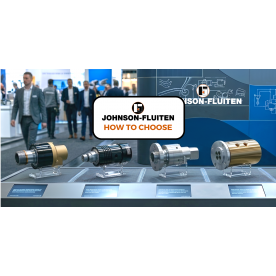
Rotary joints are critical components in fluid transfer systems between stationary lines and rotating equipment. They enable the transfer of water, steam, oil, air, gas, and other media without leakage, ensuring reliability and performance even under demanding operating conditions. Proper selection directly impacts production efficiency, service life, maintenance intervals, and operating costs. When and Why Is a Rotary Joint Required in Your Machine? Typical functions: • Transfer of fluids for heat exchange (e.g., steam/water in paper machine drying cylinders)• Supply of coolant or MQL to machine tool spindles What Are the Key Technical Parameters to Consider? Selecting a rotary joint is not determined by
-

Today, maintenance is no longer a reactive function. It is a design variable that directly affects productivity, reliability, and overall operating costs. This is especially true for critical components, such as rotary joints, used to transfer water, steam, thermal oil, and other industrial fluids in continuous applications that are strategically important for production. When a rotary joint stops or leaks, the impact is rarely limited to the component: even a short machine downtime affects production, quality, and safety. It is in this context that the concept of Maintenance 4.0 takes on concrete meaning. Why is the maintenance of rotary joints a critical issue? In many plants, rotary joints are perceived as standard components. The problem arises when it becomes necessary to replace the mechanical seal, which is often designed to be accessed only after the joint has been removed from the machine. This approach typically involves:
-
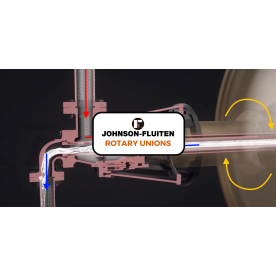
Whether it is paper manufacturing, plastic packaging printing, chemical processing, or operating complex machine tool systems, transferring fluids between stationary and rotating components is a constant engineering challenge. What exactly is a rotary joint? A rotary joint, also known as a rotary union, is a precision mechanical sealing device that allows the transfer of a fluid (liquid or gas) from a stationary supply line to a rotating machine component.Consider a heated roll in a paper mill or a machine tool spindle requiring coolant: the fluid must enter the component while it rotates at high speed, without leakage and while maintaining constant pressure. The rotary joint is the interface that makes this possible. Common industry terms include: