





industrial innovation
-
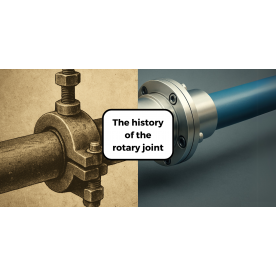
When you look at the heart of any advanced manufacturing line, whether it’s a paper mill, a food processing plant, or a high-speed CNC machine, you’ll find a component working tirelessly behind the scenes: the rotary joint. Industrial engineers, production and maintenance managers know the pain of fluid leaks, frequent maintenance, and costly downtime. But what if the solution was a single innovation that transformed how industries harness water, steam, and other fluids in motion? What is a rotary joint and why is it important in industrial machinery? A rotary joint—also known as a rotary union or swivel joint—is a mechanical device that allows the transfer of steam, water, oil, coolant, air, or other media from a stationary source to a rotating part, such as a drying cylinder, drum, or spindle. Industrial rotary joints are essential in paper manufacturing, CNC machining, food processing, and chemical production. Common rotary joint a
-

In the modern industrial scenario, technological evolution and component customisation are key factors for companies seeking to maintain and improve their competitiveness, especially in highly specialised sectors such as the chemical-pharmaceutical industry. The rotary joint plays a key role in fluid handling, especially in applications requiring high temperature thresholds and heavy-duty continuous operation. The ability to develop tailor-made solutions that precisely meet customers' needs not only improves efficiency and process reliability, but also translates into a substantial competitive advantage. An emblematic example of this dynamic is the project carried out by Johnson-Fluiten for the development of the latest Custom RHB rotary joint, intended for a specific application in the chemical sector.