





maintenance 4.0
-
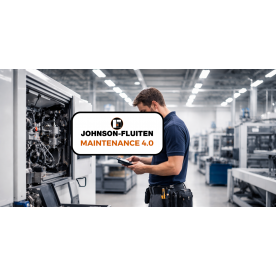
Today, maintenance is no longer a reactive function. It is a design variable that directly affects productivity, reliability, and overall operating costs. This is especially true for critical components, such as rotary joints, used to transfer water, steam, thermal oil, and other industrial fluids in continuous applications that are strategically important for production. When a rotary joint stops or leaks, the impact is rarely limited to the component: even a short machine downtime affects production, quality, and safety. It is in this context that the concept of Maintenance 4.0 takes on concrete meaning. Why is the maintenance of rotary joints a critical issue? In many plants, rotary joints are perceived as standard components. The problem arises when it becomes necessary to replace the mechanical seal, which is often designed to be accessed only after the joint has been removed from the machine. This approach typically involves: